Review: Detailed Deer Head Antler Profile Stitch
As an embroidery designer who has spent years digitizing and testing files for small business merchandise, I approach every new machine embroidery design with a critical eye. It is not enough for a file to look pretty on a screen; it must perform under the pressure of commercial production. Today, I am reviewing the Detailed Deer Head Antler Profile Stitch, a file from the Woodland Animals category that promises to add rustic elegance to various projects. For boutique owners, café operators, and handmade brands looking to elevate their brand identity, this design offers a compelling mix of classic imagery and clean execution.
First Impressions and Visual Personality
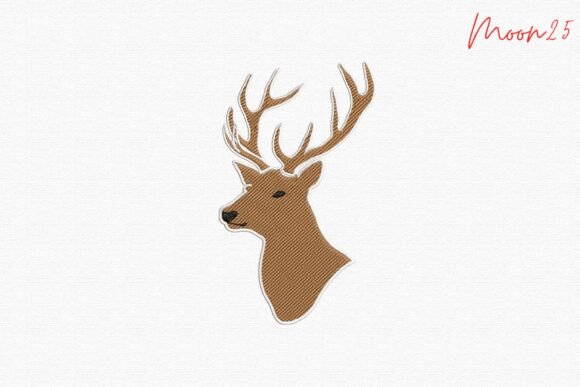
Upon loading the digital embroidery file into my editing software, the first thing that strikes me is the balance between detail and clarity. The description highlights a "beautifully shaped buck silhouette with long, branching antlers" and "clean satin borders." In the world of commercial embroidery, clean borders are non-negotiable. They define the shape and prevent the design from looking muddy once stitched out. The profile view of the deer head feels sophisticated rather than cartoonish, making it suitable for businesses that want to project a premium, earthy, or outdoorsy vibe without sacrificing professionalism.
The aesthetic leans heavily into the "rustic elegant" promise. It avoids overly playful elements, positioning itself as a serious contender for custom apparel and branded goods. Whether you run a florist shop, a craft brewery, or an outdoor gear store, this design communicates a connection to nature and quality craftsmanship. The use of satin stitches for the borders suggests a finished product that will have a slight sheen, adding value to the perceived quality of the item it adorns.
Real-World Business Applications
The true test of any embroidery file is its versatility across different mediums. I evaluated how the Detailed Deer Head Antler Profile Stitch would function in several real-world scenarios for small business owners:
- Embroidered Patches: This is arguably the strongest use case. The defined silhouette and border make it ideal for creating iron-on or sew-on patches. These can be sold as standalone small business merch or used to brand packaging.
- Staff Uniforms and Aprons: For a bakery or floral studio, placing this design on the chest of an apron embroidery project creates an immediate visual association with natural ingredients and artisanal care. The profile fits well on the left chest area without overwhelming the garment.
- Cap Embroidery: The tall nature of the antlers requires careful placement on curved surfaces like baseball caps. However, if the digitizing accounts for pull compensation, this could serve as a striking front or side logo for team hats.
- Tote Bag Design: Canvas totes are a staple for retail shops. The rustic theme pairs perfectly with eco-friendly bags, serving as a durable tote bag design that customers will actually want to carry.
- Product Labels: For handmade product creators, a small version of this design can act as a woven-label alternative, stitched directly onto hang tags or fabric care labels to enhance handmade product presentation.
Technical Considerations and Placement Challenges
While the design is visually appealing, there are technical hurdles that must be addressed before running a production batch. The "long, branching antlers" mentioned in the description are the most critical element to evaluate. In smaller applications, such as a 2-inch patch or a sleeve detail, fine details in antlers can easily fill in or break if the stitch density is too high or if the thread tension is not perfect.
I strongly advise testing this design on the specific fabric texture you intend to use. Textured fabrics like canvas or twill can cause small details to get lost, while slippery performance fabrics might require aggressive hooping. When working on dark uniforms, ensure that the recommended thread colors provide sufficient contrast. A dark brown thread on a black polo shirt, for instance, might render the "detailed" aspects invisible from a distance.
Furthermore, curved surfaces present a challenge for vertical designs. If you are attempting cap embroidery, the height of the antlers might push the limits of standard cap frames. You may need to verify the hoop size compatibility with your machine's cap driver. Always create a printable mockup or a physical sample on a scrap piece of the actual garment to check for registration issues before committing to a full run.
Impact on Brand Identity and Customer Trust
In the current market, visual consistency is key to building customer trust. Using a high-quality design like the Detailed Deer Head Antler Profile Stitch signals that a business cares about the details. A sloppy or pixelated logo can undermine a brand's perceived value, whereas a crisp, well-stitched deer head reinforces a narrative of quality and attention to detail.
For Etsy sellers and craft business owners, this design acts as a powerful asset in your design assets library. It helps differentiate your products from mass-produced items. When a customer receives a tote bag or an apron with a professionally embroidered deer head, the tactile quality of the stitches enhances the unboxing experience, leading to higher engagement and potential repeat business. It transforms a simple commodity into a branded experience.
Professional Designer Notes for Production
Before you integrate this file into your workflow, consider the following checklist to ensure the best results:
- Test in Black and White First: Convert the design to a single color in your software to check the integrity of the shapes and spacing without the distraction of color blending.
- Verify Small Scale Legibility: Stitch a sample at the smallest size you intend to use (e.g., for a patch) to ensure the antler branches do not merge together.
- Check Thread Contrast: Ensure your chosen thread colors stand out against your base fabric, especially for low-light environments where the merchandise might be displayed.
- Inspect Spacing and Density: Look for areas where stitches might be too close together, which can cause fabric puckering or thread breaks.
- Confirm Hoop Size: Double-check that the design dimensions fit within your available hoop, particularly if using specialized frames for caps or sleeves.
- Use Proper Stabilizer: Match your stabilizer to the fabric weight. Heavy designs on light fabrics often require cut-away stabilizer to prevent distortion over time.
- Create Client Mockups: Always present a physical stitched sample or a high-fidelity digital mockup to clients for approval before finalizing large orders.
- Review Licensing: Confirm the commercial licensing terms of the digital embroidery file to ensure you are authorized to use it for resale or branded merchandise.
Since the product description does not specify exact stitch counts, file formats, or specific license terms, it is imperative to review the downloadable package details thoroughly before production. By taking these precautions, the Detailed Deer Head Antler Profile Stitch can become a cornerstone of your commercial embroidery offerings, delivering both aesthetic beauty and functional durability for your clients.